Sodastream is a video work by Roderick Buchanan (b. 1965, Glasgow, Scotland), an internationally recognised artist whose practice spans video, photography, installation, text, and socially engaged projects. Working across a range of media, Buchanan examines identity, belonging, collective memory, and the ways in which cultural affiliations are constructed and performed. Sport, popular culture, music, and community rituals frequently serve as points of departure for investigations into social behaviour and political history. Often combining documentary observation with subtle forms of intervention, Buchanan’s works reveal the complex relationships between individuals and the wider social structures that shape their lives. Through an approach that is at once humorous, critical, and deeply observant, he transforms everyday situations into reflections on contemporary society and culture.
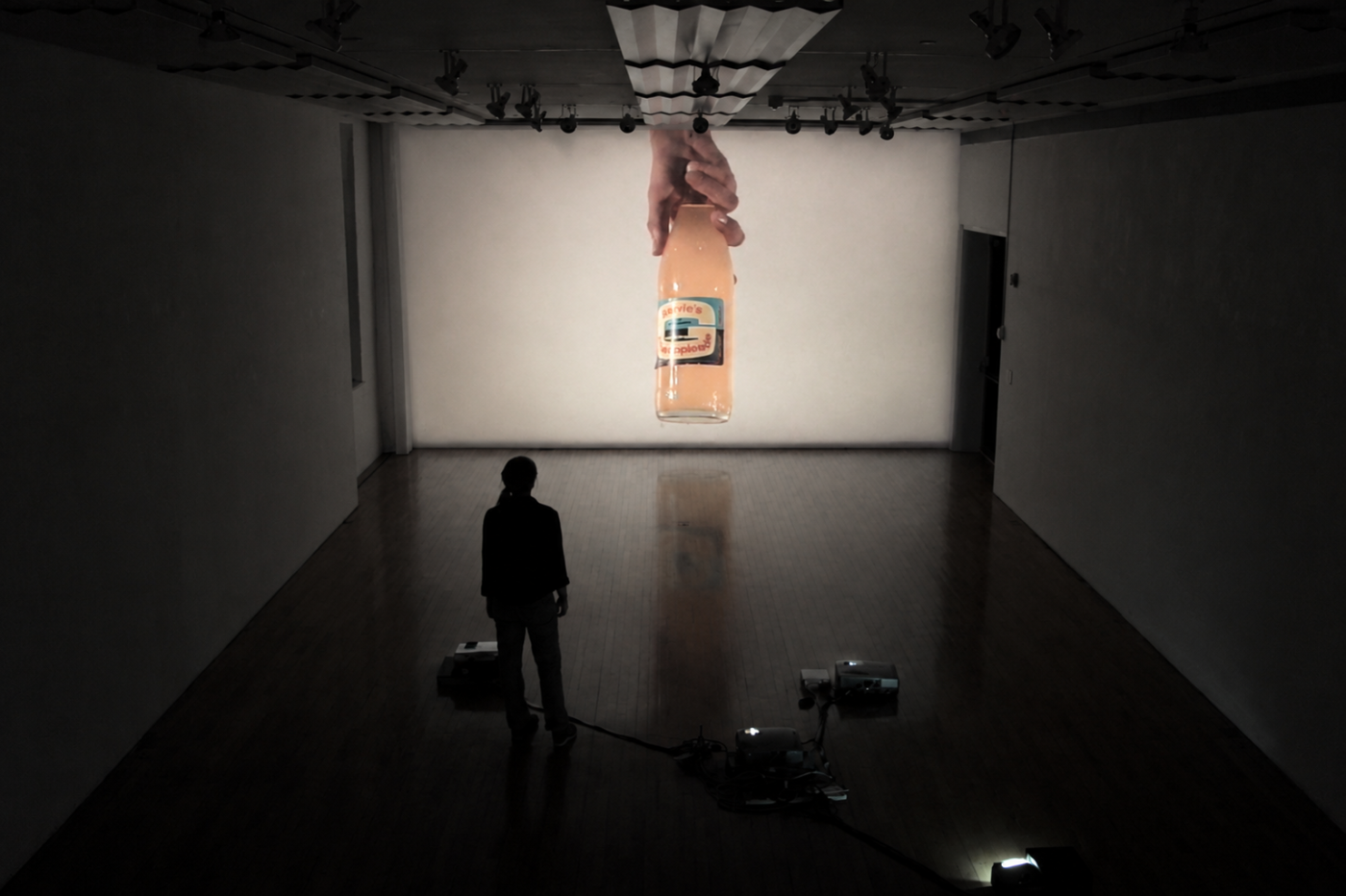
The concept behind Sodastream centres on a simple but visually compelling action. The video presents a succession of inexpensive carbonated soft-drink bottles held briefly before being dropped onto a hard concrete surface. Each bottle shatters on impact, releasing brightly coloured liquid that erupts, foams, and spreads across the floor before quickly disappearing. Repeated again and again, this cycle of anticipation, destruction, and release becomes the central focus of the work. Through repetition, Buchanan transforms a familiar consumer product into a spectacle that is both playful and unsettling, drawing attention to the fragility of everyday objects and the fleeting nature of the event itself. The work’s visual intensity emerges from the contrast between the exuberant colours of the escaping liquid and the violence of the shattered glass.
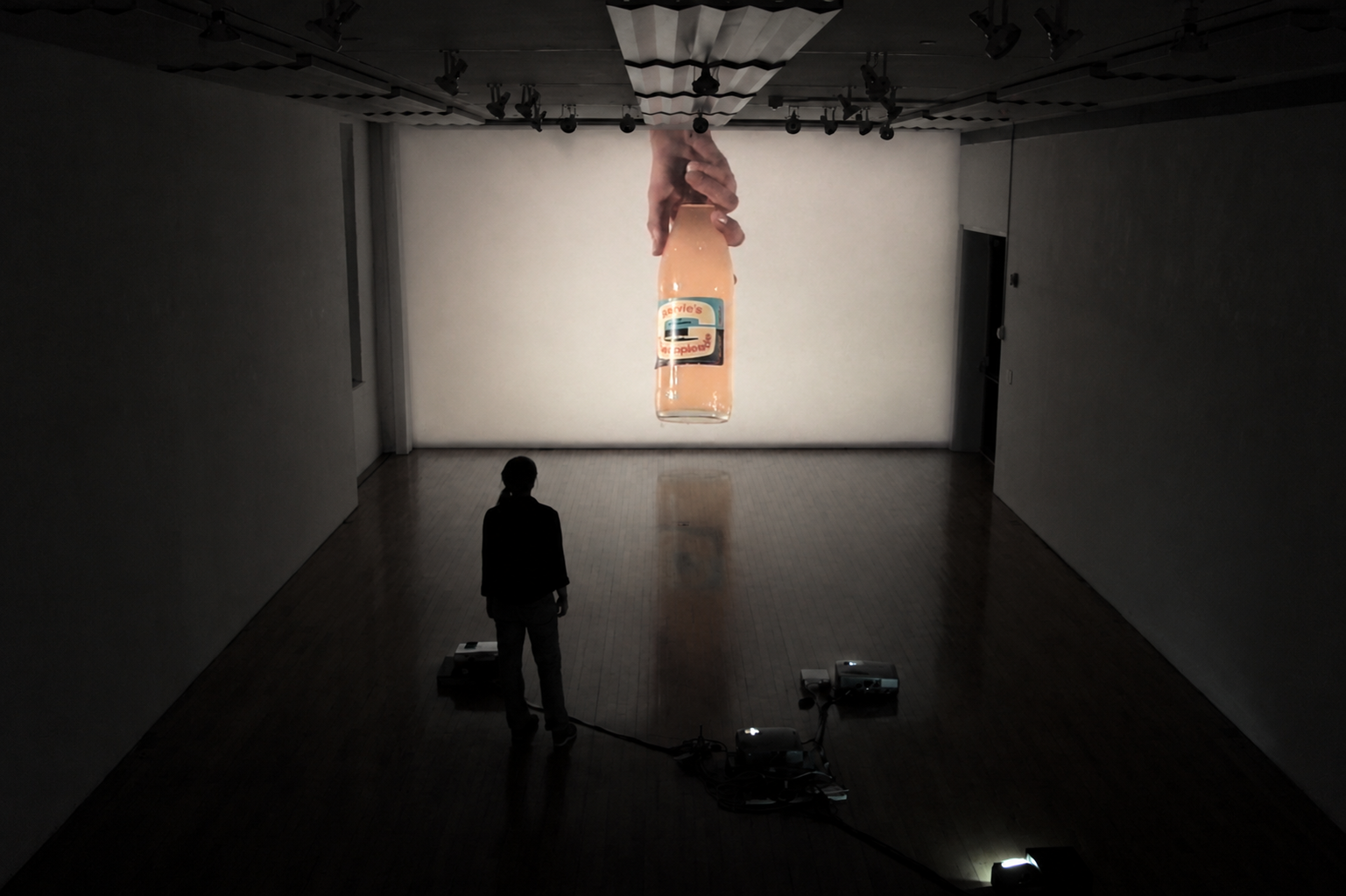
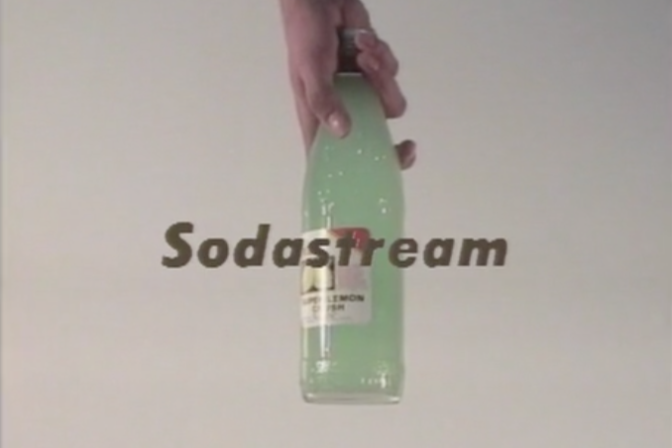
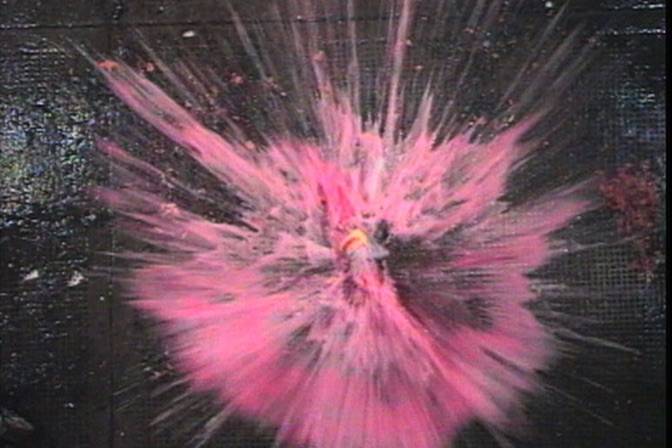
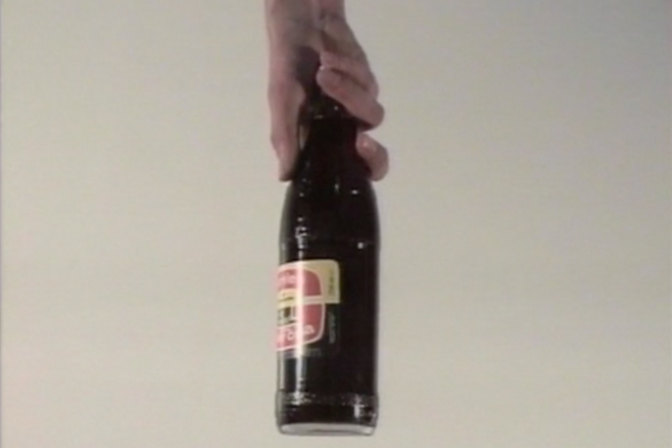
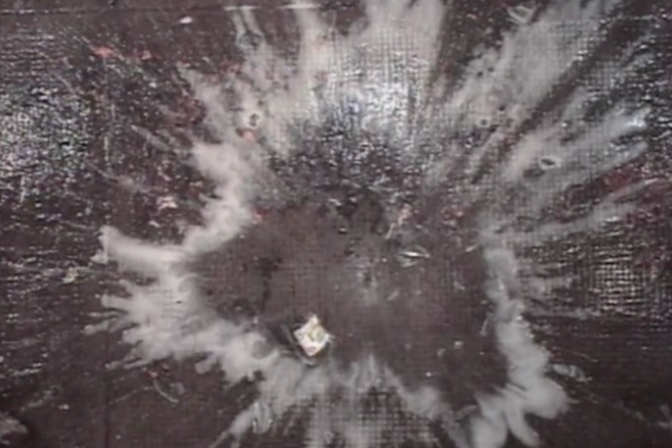
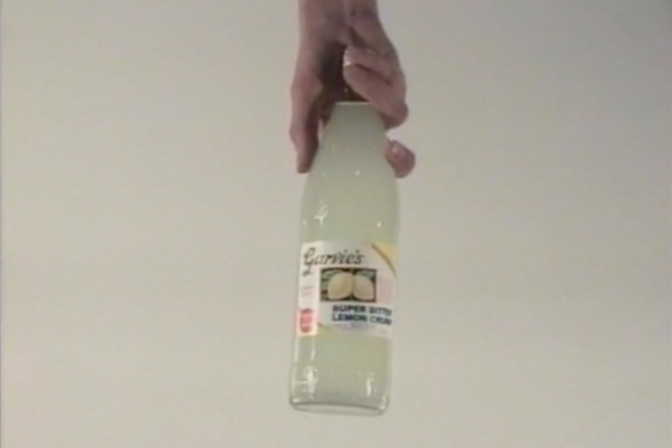
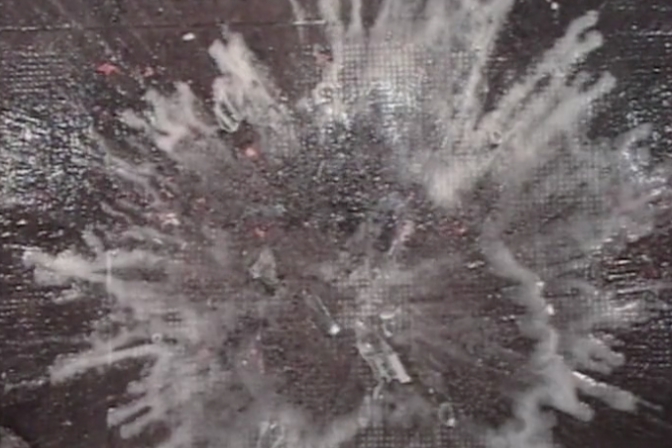
At one level, Sodastream can be understood as a meditation on consumer culture and the circulation of mass-produced commodities. Soft-drink bottles are instantly recognisable symbols of global commerce and everyday consumption. By repeatedly destroying them, Buchanan subverts their familiar commercial presentation and redirects attention to their material qualities—the glass, the liquid, the sound, and the moment of impact itself. The work’s economy of means belies a rich network of associations concerning consumption, waste, spectacle, and desire. Through this deceptively simple gesture, Buchanan invites viewers to consider how ordinary objects acquire meaning and how acts of repetition can transform the commonplace into something both strange and memorable.
Through its combination of humour, destruction, repetition, and visual spectacle, Sodastream exemplifies Buchanan’s ability to transform an ordinary action into a compelling reflection on contemporary culture. The work’s simplicity is deceptive, revealing broader questions about consumption, value, and the rituals that shape everyday life.
Roderick Buchanan’s international career has been marked by significant recognition and major exhibitions across Europe, North America, Asia, and Australasia. He came to prominence during the 1990s as part of a generation of artists associated with the revitalisation of contemporary art in Scotland and was awarded the inaugural Beck’s Futures Prize in 2000, followed by a Paul Hamlyn Award in 2004. His work has been included in major international exhibitions such as the Venice Biennale, the Johannesburg Biennale, the Busan Biennale, the Taipei Biennial, and the Indian Triennial, where he represented the United Kingdom. Significant solo exhibitions have been presented at institutions including Dundee Contemporary Arts, the Camden Arts Centre in London, the Imperial War Museum, the Scottish National Portrait Gallery, and the Gallery of Modern Art in Glasgow. His works are held in major public collections including the Tate, the National Galleries of Scotland, and Glasgow’s Gallery of Modern Art, reflecting an enduring contribution to contemporary visual culture.
Sodastream, commissioned by Film and Video Umbrella in collaboration with FACT (Foundation for Art and Creative Technology) and Tramway, Glasgow.