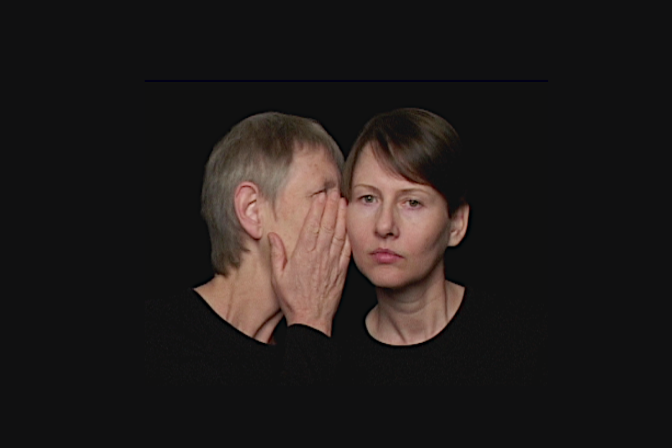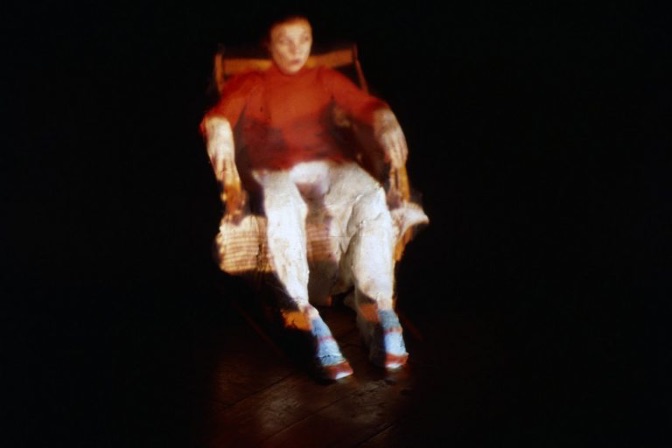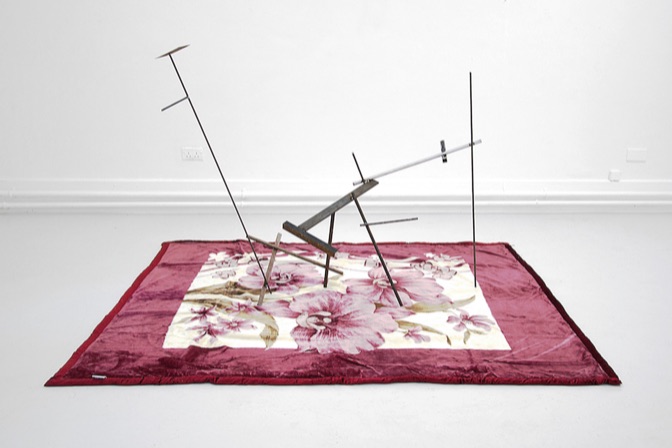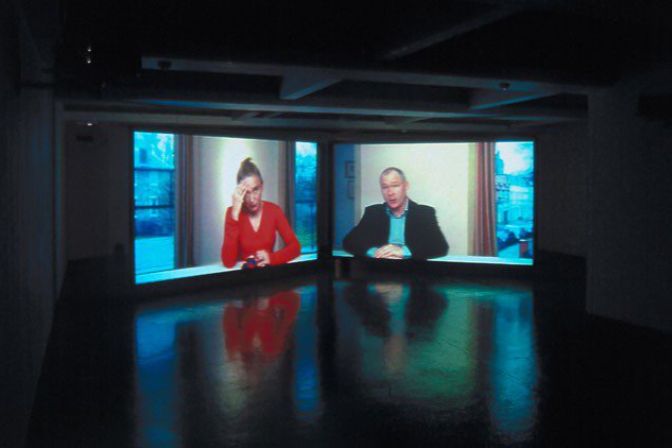
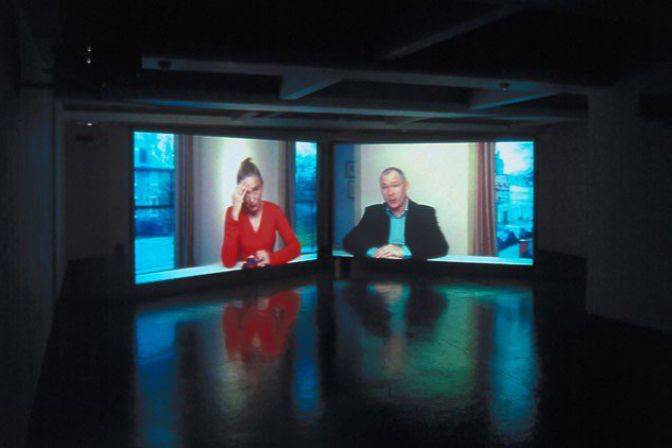
This compelling two-part work by Breda Beban (1952–2012), a Serbian-born, UK-based artist, explores the emotional complexities, contradictions, and vulnerabilities that accompany love. The dual-screen installation, from which the exhibition takes its title, focuses on the painful dissolution of a romantic relationship. Through a carefully choreographed encounter, Beban and an actor portraying a former partner revisit the remnants of an affair that is clearly ending yet remains emotionally charged. As they retrace shared memories and expose unresolved hurts, their growing distress and lingering desire unfold against the steady movement of a tracking camera. Its calm, impersonal passage between the two figures creates a striking contrast with their emotional turmoil, sometimes capturing moments of intense poignancy, while at other times seeming indifferent to their personal suffering.
The emotional weight of I Can’t Make You Love Me is balanced by its companion film, Walk of the Three Chairs, which celebrates the empowering and transformative aspects of love. Filmed by acclaimed cinematographer Robby Müller (1940–2018), the atmospheric ten-minute work follows Beban drifting along the Danube near Belgrade aboard a boat accompanied by a small Romani ensemble.
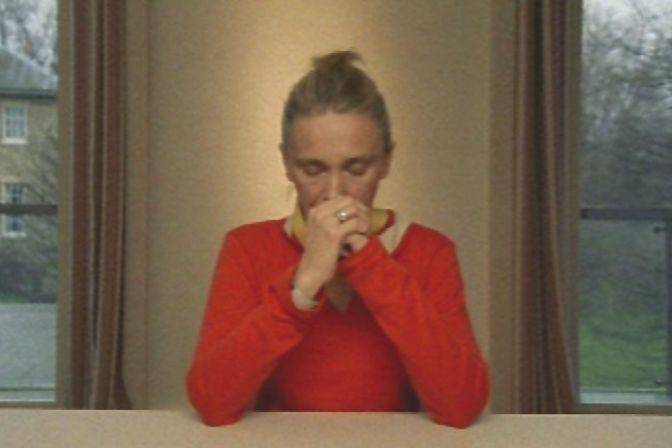
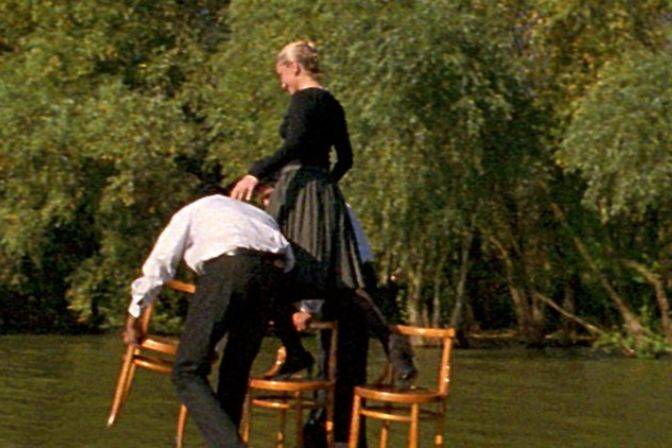
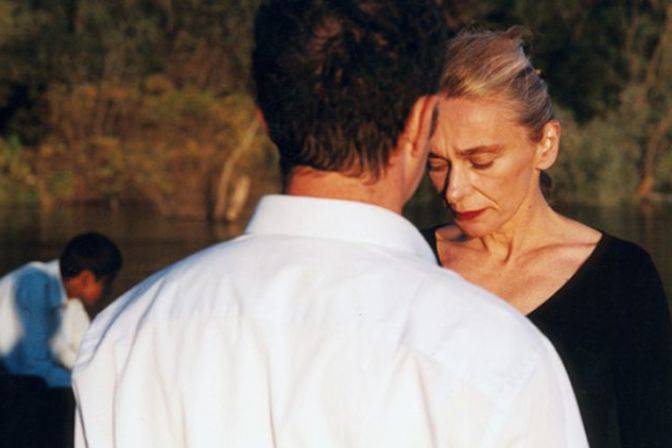

The film documents the performance of a traditional Slavic ritual referenced in its title, in which an honoured individual moves forward without touching the ground as a chair is repeatedly carried from behind them to the space ahead. While taking part in this joyful yet precarious ceremony, Beban and the musicians sing a familiar folk song together. The work captures a sense of elevation, celebration, and self-discovery, while also acknowledging the hardships intertwined with love. This connection is underscored by the song’s evocative title: Who Does Not Know How to Suffer Does Not Know How to Love, a phrase that links the exhilaration of the ritual to the emotional wounds explored in the accompanying film.
Beban’s work has been exhibited internationally at leading institutions and exhibitions, including Tate Modern, Tate Britain, South London Gallery, the Museum of Contemporary Art Belgrade, and the Venice Biennale. Through film, video, photography, and installation, she addressed themes of love, memory, exile, identity, and cultural displacement. Her continued presence in major exhibitions and retrospective projects demonstrates the lasting significance of her contribution to contemporary moving-image art.
I Can’t Make You Love Me and Walk of the Three Chairs were co-commissioned by Film and Video Umbrella and John Hansard Gallery, with support from the National Touring Programme of Arts Council England.