


Kyunchome
All Living Things are Breathing Now, the first solo exhibition in the British Isles by acclaimed Japanese artist duo Kyunchome, curated by Keith Whittle.
This exhibition presents a new body of work that explores and celebrates the sea and intertidal zones—dynamic spaces where land and water meet. These energetic ecotones serve as vital contact zones, where humans and diverse species coexist and respond to the rhythmic movements of the tides. Through their unique lens, Kyunchome invites viewers to consider the fluid interconnections between ecological, cultural, and spiritual lifeforms.
Click here to read more. Click here to download the exhibition brochure.


Bontarō Dokuyama
Borrowed Scenery (study), an exhibition of work by Bontarō Dokuyama. Exploring the continuous interaction between historical perspectives and the unending dialogue between the present and past in Japan. Dokuyama takes the symbolic cherry blossom, its historical and contemporary interpretation, and its adoption as a symbol of Japanese national identity.
A narrative that during Japan’s Imperialist expansion across South East Asia linked soldiers whose lives were cut short through battle to the Somei-Yoshino strain of cherry tree blossoms, with its petals that fall just a few days after reaching full bloom, in the minds of mourners.
Click here to read more.


Mari Katayama
Broken Heart, the first UK solo exhibition by Japanese artist Mari Katayama at White Rainbow in Fitzrovia, London. Known for her powerful blend of photography and sculpture, Katayama presents a deeply personal and visually striking body of work in which her own body features centrally.
Often set against vast natural landscapes or within intimate, constructed environments, her images are meticulously composed—surrounded by embroidered fabrics, handcrafted objects, and prosthetic limbs—creating a narrative that explores themes of identity, vulnerability, and resilience.
Click here to read more.


Chikako Yamashiro
Shapeshifter, the first UK solo exhibition at White Rainbow, Fitzrovia, London by acclaimed performance and video artist Chikako Yamashiro.
Yamashiro, winner of the Asian Art Award 2017, dramatises the lesser-known aspects of Okinawa’s contemporary reality, while questioning dominant historical accounts of Japanese and American occupation of the islands.
Click here to read more.


Aki Sasamoto
Clothes Line, a solo exhibition of drawings and films of performances at White Rainbow, Fitzrovia, London by Aki Sasamoto. The artist’s first presentation at a UK gallery.
Based in New York, Sasamoto works in performance, sculpture, dance, and whatever other media required to get her ideas across. Sasamoto’s performance/installation works revolve around gestures on everything and nothing.
Click here to read more.
![Moré Moré [Leaky]: The Falling Water Given #4-6, Installation view at White Rainbow, London, 2017 Wood Frames, found objects, water pump system](http://keithwhittle.org/wp-content/uploads/slider/cache/f77de345378d4bbd8727a6ed36e9635a/YukoMohri.07.jpg)
![Moré Moré [Leaky], Installation view at White Rainbow, London 2017](http://keithwhittle.org/wp-content/uploads/slider/cache/bab59ac4056eb3deee19e32a594e468f/YukoMohri.06.jpg)
![Moré Moré [Leaky]: The Falling Water Given #4-6, Installation view at White Rainbow, London, 2017 Wood Frames, found objects, water pump system](http://keithwhittle.org/wp-content/uploads/slider/cache/bae9d65d007c516d2f63c20110c997f0/YukoMohri.01.jpg)
![Moré Moré [Leaky]: The Falling Water Given #5 (detail), 2017 Wood Frame, found objects, water pump system](http://keithwhittle.org/wp-content/uploads/slider/cache/b9a24c0997a6b4f529fac3afb4893af7/YukoMohri.04.jpg)
![Moré Moré [Leaky], Installation view at White Rainbow, London 2017](http://keithwhittle.org/wp-content/uploads/slider/cache/b4fbd58f87ba7f1036fc7cf5715793aa/YukoMohri.03.jpg)
![Moré Moré [Leaky], Installation view at White Rainbow, London 2017](http://keithwhittle.org/wp-content/uploads/slider/cache/b66be9c8b48126ca0707045b331bea59/YukoMohri.05.jpg)
![Moré Moré [Leaky]: The Falling Water Given #4-6, Installation view at White Rainbow, London, 2017 Wood Frames, found objects, water pump system](http://keithwhittle.org/wp-content/uploads/slider/cache/c1467de7a3ecda9045ddfef0cb201453/YukoMohri.09.jpg)
Yuko Mohri
Moré Moré [Leaky], an exhibition at White Rainbow, Fitzrovia, London by Yuko Mohri. The artist’s first presentation at a UK gallery.
The solo exhibition by Mohri, who recently represented Japan at the 60th Venice Biennale, showcased her installation titled Moré Moré [Leaky]. This work is part of her long-term research project focusing on the Tokyo metro. Mohri first presented this project at the prestigious Nissan Art Award in 2015, where she won the award. Responsive to the built environment, her kinetic installation at White Rainbow is in the form of a circuit, with found materials ‘wired’ together to contain flowing water, mimicking makeshift water repairs she noticed in the Tokyo metro.
Click here to read more.


Meiro Koizumi
Battlelands, a solo exhibition of film, photography and sculpture at White Rainbow, Fitzrovia, London by Japanese artist and filmmaker Meiro Koizumi (b. 1976, Gunma, Japan). The artist’s first UK solo exhibition.
In his compelling and challenging body of work, Koizumi examines a range of complex issues: power dynamics on scales both familial and national; the tension between staged and authentic emotion; and the conflict between duty and desire. Koizumi’s artistic practice is shaped by and often directly addresses the political and military history of his native Japan, and its impact on culture and society in the present. Japan’s Peacetime Constitution – a reaction against the brutal militarism of Japanese imperialism – has seen pacifism become central to Japanese identity.
Click here to read more.

![Chim↑Pom, Archival installation from '道 [Street]' (2017), installation view at White Rainbow, London, UK, 2018 © Chim↑Pom, Image: Damian Griffiths](http://keithwhittle.org/wp-content/uploads/slider/cache/7673f292ed0a1d094f0f6b6fdf86d70d/Chim-Pom.05.jpg)
![Chim↑Pom, Archival installation from '道 [Street]' (2017), installation view at White Rainbow, London, UK, 2018 © Chim↑Pom, Image: Damian Griffiths](http://keithwhittle.org/wp-content/uploads/slider/cache/2620e6b60e25f8548e3096972dd2d345/Chim-Pom.04.jpg)
![Chim↑Pom, Archival installation from '道 [Street]' (2017), installation view at White Rainbow, London, UK, 2018 © Chim↑Pom, Image: Damian Griffiths](http://keithwhittle.org/wp-content/uploads/slider/cache/4de224ea3bc12e9494b8fbb6f9f41e77/Chim-Pom.02.jpg)
![Chim↑Pom, Archival installation from '道 [Street]' (2017), installation view at White Rainbow, London, UK, 2018 © Chim↑Pom, Image: Damian Griffiths](http://keithwhittle.org/wp-content/uploads/slider/cache/561cff7844e2b304be71941b384d7d59/Chim-Pom.06.png)
Chim↑Pom
Why Open? – a solo exhibition at White Rainbow, Fitzrovia, London by the renowned artist collective Chim↑Pom.
Comprising Ryuta Ushiro, Yasutaka Hayashi, Ellie, Masataka Okada, Motomu Inaoka, and Toshinori Mizuno, Chim↑Pom’s work includes interventions through performance, video, painting, installation, curating and organising events. Sharp social critique underpins the group’s work, and the collective is unafraid to cause controversy in the service of their message. As Christopher Y. Lew, Associate Curator at the Whitney Museum, New York, has stated: ‘the group negotiates a difficult line – they do not make the direct assertions of activists but rather offer an ambiguous voice that is both complicit and critical.
Click here to read more.


Taro Izumi
My eyes are not in the centre, an expansive installation at White Rainbow, Fitzrovia, London by Taro Izumi. The artist’s first UK solo exhibition.
Comprised entirely of new work, Izumi’s exhibition constructs a complex web of interactions mediated through technology, evoking digital and new media’s dissociative effects on the senses. How does perceptible reality change when first hand experience is outsourced to a lens?
Click here to read more.


Satoru Aoyama
Division of Labour, a solo exhibition at White Rainbow, Fitzrovia, London by Satoru Aoyama (b. 1973). The focus of the exhibition was a new series of work: ‘Map of the World (Dedicated to unknown embroiderers)’ (2012-). The works reference the Afghan craftswomen who assisted in the making of Alighiero Boetti’s ‘Mappa’ series (1971-1989).
For his new series, Aoyama has embroidered four world maps, along with a map of Europe. Reflecting the passage of time since Boetti’s works, new countries such as Ukraine and Serbia are now visible on the contemporary world map.
Click here to read more.


Shigeo Anzaï
Index I&II, solo exhibitions at White Rainbow, Fitzrovia, London by renowned photographer Shigeo Anzaï. The exhibitions focused on Anzaï’s role as a witness to the landmark exhibitions, events and happenings of the avant-garde in Japan 1970–6, with particular focus on the 10th Tokyo Biennale, 1970. This was the first solo exhibition of Shigeo Anzaï in the UK.
Engaging with two aspects of Anzaï’s photographic practice, White Rainbow held two solo exhibitions of Anzaï’s work. Index I, which focused on Anzaï’s documentation of landmark exhibitions, and Index II, focusing on Anzaï’s portraits of the artists he came into contact with over a long career, including David Hockney, Yayoi Kusama, Nam June Paik and Joseph Beuys, among others.
Click here to read more.
Sutapa Biswas
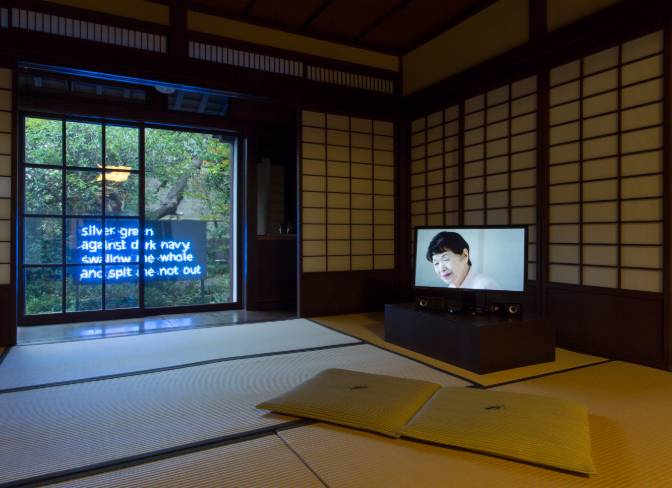
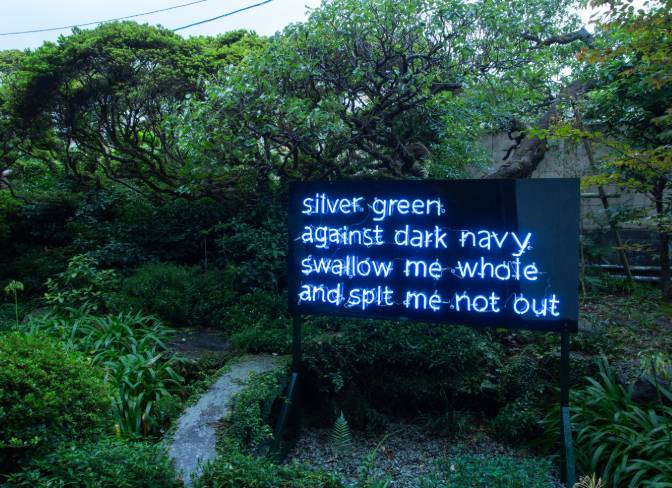
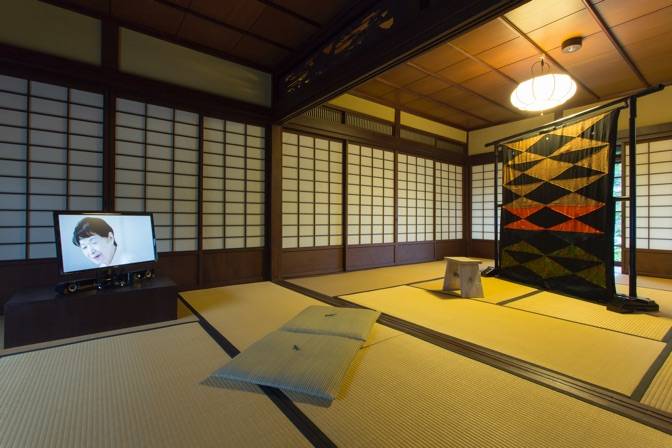
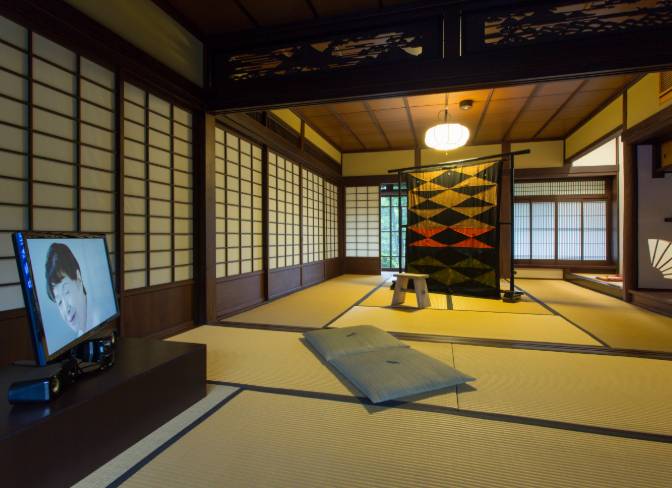
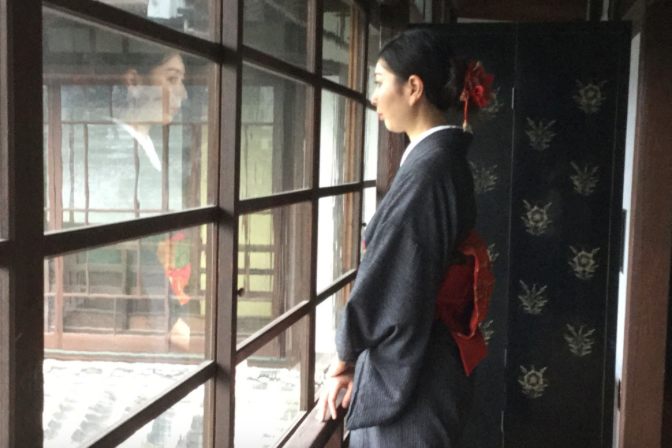
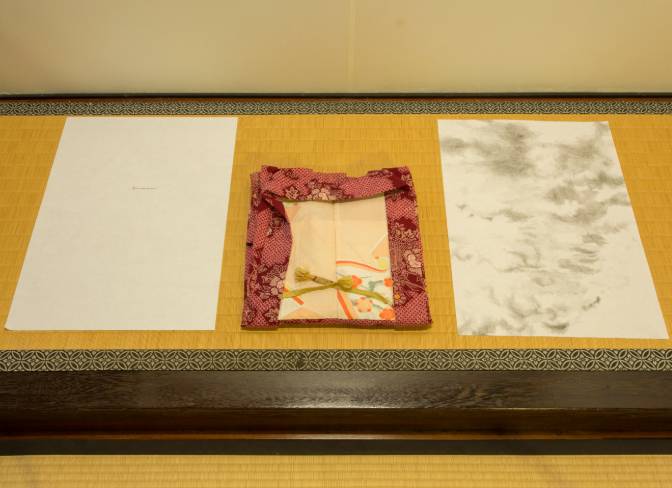
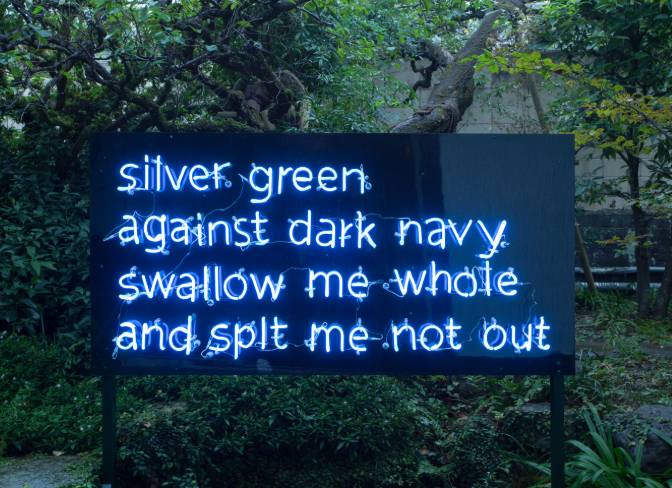
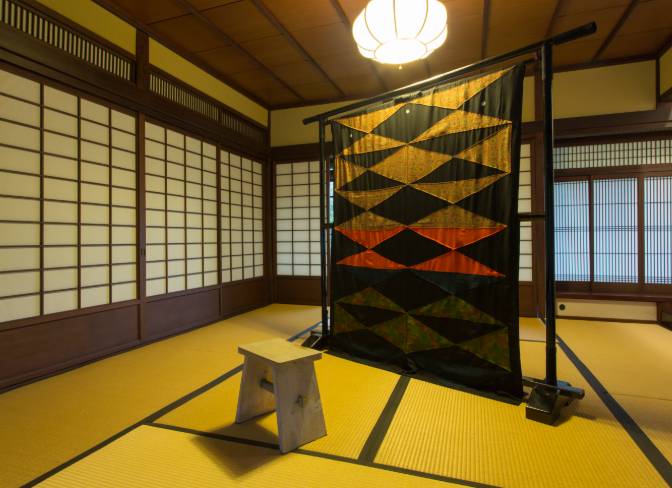
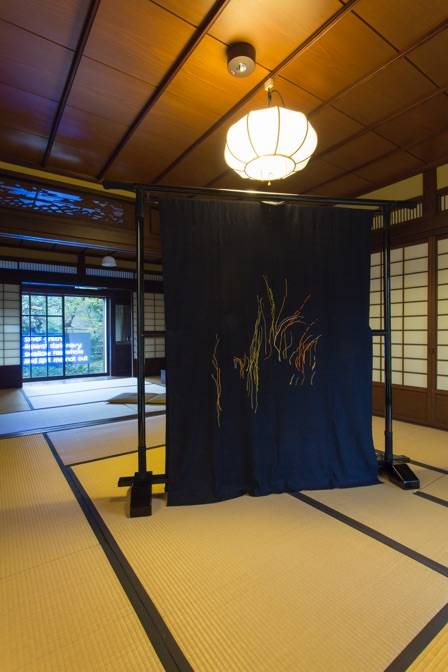
Mata Ne (See You Soon) is a solo exhibition of video and mixed media works by British Indian artist Sutapa Biswas, held at Fujiya Gallery, Beppu, Japan—the artist’s first presentation at a Japanese gallery.
Curated by Keith Whittle during a two-month residency in Japan, the exhibition was inspired by the oral histories of women from Oita, who shared pivotal moments from their lives. Through an autobiographical and narrator-centred methodology, Mata Ne serves as a powerful means of recovering overlooked narratives. It foregrounded women’s lived experiences and challenged dominant historical accounts, calling for a critical re-examination and revision of the past.
Click here to read more


Adam Chodzko
Expulsion from the Garden of Eden is a solo exhibition of video and mixed media works by British artist Adam Chodzko, marking his first solo presentation at a Japanese gallery.
Curated by Keith Whittle during a two-month residency in Japan, the exhibition featured a suite of works that continued Chodzko’s exploration of how communities engage with their sense of identity, place, history, and their relationship to the world beyond. Blending elements of documentary and speculative fiction, the works developed a series of constructed mythologies to examine these themes—communicating a psychological surrealism that bridges the familiar and the fantastical.
Click here to read more.


John Akomfrah
The Call of Mist is a work by Ghanaian-born British artist and filmmaker John Akomfrah, internationally renowned for his poetic and deeply layered explorations of memory, post-colonial histories, temporality, and visual aesthetics. Filmed across various locations on the Isle of Skye, the work serves as a poignant meditation on loss, memory, and the role of media in shaping collective and personal narratives.
In 2024, Akomfrah presented a new body of work titled Listening All Night to the Rain at the British Pavilion during La Biennale di Venezia, further extending his practice of engaging with historical and environmental themes through a rich visual language.
Click here to read more.


Derek Jarman
Blue is a film by Derek Jarman the English artist and filmmaker celebrated for his avant-garde cinema, as well as his work as a set designer, writer, gardener, and outspoken gay rights activist.
Originally released in 1993, the year before his death from an AIDS-related illness, Blue is a bold and deeply personal work that defies cinematic convention. The film presents a monochromatic blue screen accompanied by an immersive soundscape of music, voice, and sound design. Weaving a sensory tapestry of memory, reflection, and resistance, Blue stands as both a meditation on illness, dying, and love, and a political call to action—marking one of the most poignant and courageous artistic responses to the AIDS crisis in 20th-century art.
Click here to read more.


Elizabeth Price
Turner Prize-winning, London-based artist Elizabeth Price is known for her richly layered moving image works, created specifically for gallery settings. Her immersive video installations combine a wide range of materials—including analogue and digital photography, animation, motion graphics, archival documents, architectural plans, and film footage—woven together with scrolling text, computer-generated narration, and carefully selected musical scores.
Price’s works are intellectually and emotionally charged, drawing on diverse historical sources to explore themes such as institutional power, technology, and memory. Her distinctive approach transforms archival material into powerful, immersive experiences that blur the boundaries between historical record and speculative narrative.
Click here to read more.


Michael Lin
Untitled is one of two site-specific works created in Beppu, Japan, by Michael Lin, an artist based in Taipei and Brussels.
Since the late 1990s, Lin has been recognized for his expansive use of floral motifs deeply rooted in Taiwanese culture. These patterns—reminiscent of the traditional embroideries often found on Taiwanese pillows—reflect the shifting domestic and political landscapes Lin witnessed upon his return to Taiwan after many years abroad. While his repetitive and seemingly simple floral landscapes draw from Taiwanese visual traditions, they have become the most politically and culturally significant elements of his practice, embodying complex narratives of identity, history, and belonging.


Sarkis
In Colors in Water two site-specific works created in Beppu, Sarkis introduces a modest yet profoundly symbolic installation: a simple circular wooden table on which bowls are carefully arranged. These vessels become sites of quiet transformation, where Sarkis’ “Angels” — assistants or spiritual intermediaries — pour colors into water, generating a delicate, ever-shifting spectrum of translucent hues. These ephemeral colour fields, born during a series of workshops, embody the “infinite fractions of light” that emerge from collaborative acts of creation.
The resulting works are not confined to the studio; they are transferred to a secondary site — a Shrine — where they continue to resonate, joining disparate locations and communities in a shared ritual of color, memory, and presence.
Click here to read more.


Sybille Neumeyer
Sybille Neumeyer is an interdisciplinary artist working at the intersection of art, ecology, science, and social inquiry. Her research-based practice explores hidden forces shaping our environments and relationships with nature through observation, translation, and storytelling.
In 2013, Sybille Neumeyer participated in the ARCUS International Artist-in-Residence Programme in Ibaraki, Japan, selected by curators Keith Whittle (UK) and Naoko Horiuchi (Japan) in collaboration with the ARCUS Project. During the residency, she explored human-nature relationships amid the region’s agricultural traditions and the aftermath of the 2011 earthquake and Fukushima disaster. Embracing subtle gestures over grand statements, her work reflects her role as a “silent observer.”
Click here to watch a short documentary.


Hoo Fan Chon
Into the World of Palpable Objects and Fruitful Delight is a site-specific solo exhibition curated by Keith Whittle, featuring the work of Malaysian artist Fan Chon Hoo at Eleven Spitalfields—one of the historic Georgian townhouses built in the late 17th and 18th centuries to accommodate French Protestant (Huguenot) refugees. This marked Fan Chon Hoo’s first solo exhibition in the UK.
Shortlisted for Saatchi Gallery and Channel 4’s New Sensations 2010, Fan Chon Hoo employs a uniquely compelling visual language. Assuming the role of a modern-day amateur antiquarian and anthropologist, informed by the explorations of 18th and 19th-century travellers and naturalists, Hoo investigates how cultural artefacts serve as residues and deposits of cultural translation processes.
Click here to read more.


Yuko Mohri
Brairdcast Media: A History of Machine Translation is the first international residency and solo exhibition outside of Japan by acclaimed artist Yuko Mohri, winner of the 2016 Asian Art Award and representative of Japan at the 2024 Venice Biennale.
Produced and curated by Keith Whittle, the exhibition explored the early history of broadcast media in the United Kingdom, focusing on the pioneering work of John Logie Baird, inventor of one of the first television systems. Central to the exhibition was Baird’s “Televisor”—a semi-mechanical analogue television system employing a patented mechanical scanning method—offering a lens through which Mohri investigated the translation and transmission of images, information, and media across time and technologies.
Click here to read about the artists subsequent solo exhibition at White Rainbow.


Erika Tan
A Gift to Those Who Contemplate the Wonders of Cities and the Marvels of Travelling is a two-person international residency and touring exhibition, first staged at the Northern Gallery for Contemporary Art. The project featured London-based Singaporean artist Erika Tan and was curated and produced by Keith Whittle and Alistair Robinson as part of the British Council’s major cultural festival, UK-Japan 2008.
During the summer of 2008, the participating artists undertook residencies in each other’s countries of residence—Japan and the UK—informing a body of research that culminated in newly commissioned films, videos, and photographic installations. The exhibition later toured to BankArt in Yokohama, Japan.
Erika Tan’s contribution, collectively titled Made in Japan, critically explored the expectations and assumptions surrounding Japanese culture. Her works interrogated the iconic imagery often associated with Japan and examined how perceptions of place are shaped by cultural projection, tourism, and the mechanisms—both physical and psychological—that sustain these representations.
Click here to read more.


Sun Xun
Sun Xun’s work was featured in the exhibition There is no ‘I’ in Team, part of CHINA NOW, the largest festival of Chinese culture ever held in the UK. Curated by Keith Whittle (UK), Keri Elmsly (UK), Pauline Doutreluingne (Germany), and Jian Jiang (China), the exhibition offered a rare opportunity to experience the work of a dynamic new generation of artists from mainland China, Hong Kong, Taiwan, and Macau. These artists, working in moving image, sound, and installation, represent some of the most compelling and prolific voices in contemporary Chinese art today.
Widely regarded as one of the most distinguished artists of his generation, Sun Xun integrates traditional Chinese ink painting and printmaking techniques—such as ink drawings, charcoal, woodcuts—with contemporary media, including animation and large-scale installations. His practice draws from Chinese mythology, European art history, literature, and current affairs, weaving together layered narratives that challenge historical memory and cultural identity.
Click here to read more.


Mio Shirai
Mio Shirai’s short films are infused with an enigmatic, often absurd sensibility, marked by a quiet suspense that lingers just beneath the surface. Her works reimagine traditional stories and myths through a mature and unsettling lens, drawing on narrative familiarity while subtly unravelling it. Her work formed part of A Gift to Those Who Contemplate the Wonders of Cities and the Marvels of Traveling, a two-person international touring exhibition that first opened at the Northern Gallery of Contemporary Art.
The exhibition paired Shirai with London-based Singaporean artist Erika Tan. In the summer of 2008, each artist undertook a residency in the other’s country—Tan in Japan and Shirai in the UK—immersing themselves in unfamiliar urban and cultural landscapes. The resulting film, video, and photographic installations were developed through this cross-cultural exchange, were commissioned and curated by Keith Whittle and Alistair Robinson as part of the British Council’s UK-Japan 2008 and Japan-UK 150 festivals.
Click here to visit the artists website.


Xu Huijing
Xu Huijing work was featured in the exhibition There is no ‘I’ in Team, part of CHINA NOW, the largest festival of Chinese culture ever held in the UK. Curated by Keith Whittle (UK), Keri Elmsly (UK), Pauline Doutreluingne (Germany), and Jian Jiang (China), the exhibition offered a rare opportunity to experience the work of a dynamic new generation of artists from mainland China, Hong Kong, Taiwan, and Macau.
Working across moving image, sound, and installation, these artists represent some of the most compelling voices in contemporary Chinese art today. Their practices address themes such as memory, identity, urbanisation, and technology, often through experimental and immersive forms. Challenging traditional narratives, their work reflects the complexities of modern China while pushing the boundaries of media and artistic expression.


Masaki Fujihata
The Conquest of Imperfection at Cornerhouse, Manchester, was the first major UK exhibition of Japanese media artist Masaki Fujihata. It featured eight installations created by the artist between 1996 and 2008, along with a new work specially commissioned for the Manchester exhibition. He was among the first artists to explore the potential of computers as an artistic medium and is a pioneering figure in interactive art. He received the Ars Electronica Golden Nica Award in 1996 for Global Interior Project.
Fujihata uses interactive art, virtual reality, and networking technologies to probe fundamental questions of human perception and awareness. He employs new technologies as a way of reflecting on how we use language to understand things, media, and our environment.

Hung Keung
Bloated City | Skinny Language is an interactive installation by Hung Keung + imhk lab exhibited at BALTIC, UK exploring the parallel transformation of Chinese cities and written language, particularly the shift from traditional to simplified characters and from historical urban forms to modern high-tech environments. Framed by the artist’s own Hong Kong–mainland perspective, it reflects conflicting feelings of attachment and acceleration—simultaneous desire for progress and nostalgia.
The work places viewers in a corridor with two projections showing their real-time image, while floating Chinese characters behave like swarming “bugs” that react differently on each side. This creates a split experience of pursuit and distance, allowing the audience to physically feel tension between change and stasis, identity and transformation.


Robin Rimbaud
Passing Beneath the Surface is a suite of sound works by British artist Robin Rimbaud, aka Scanner. Renowned for his pioneering use of intercepted communications and sonic experimentation, Scanner has been a leading figure in electronic and sound art since the early 1990s. His early adoption of radio scanners to capture mobile phone conversations and ambient transmissions established a unique artistic voice that explored the boundaries between public and private space, technology, and surveillance.
Over a four-decade career, Rimbaud has produced a vast body of work spanning sound installations, operas, ballets, virtual reality, and public art.

John Maeda
What Do You Want To Do With It? at The Institute of Contemporary Arts (ICA), London’s leading space for contemporary culture, brought together leading international artists and digital media pioneers, including John Maeda, Tim Etchells, Mike Figgis, Digista NHK, Tsai Ming-liang, Mark Amerika, as well as organisations such as the British Interactive Media Association and Digit. Many of these participants were in residence throughout the festival, contributing to a wide-ranging and ambitious programme of commissions, installations, exhibitions, talks, and residencies.
The festival event also featured an array of interactive experiences — from websites, games, and kiosks to video and text messaging activities — that explored the evolving relationship between technology and culture. What Do You Want To Do With It? was curated and realised by Andrew Chetty and Keith Whittle, working with Echo Eschen and A Fish Can Sing. Funded by Arts Council England, it was sponsored by Motorola, SUN Microsystems, and Sony PlayStation.


Isaac Julien
One of today’s most prominent and influential figures in media art and film, Isaac Julien is an award-winning British installation artist and filmmaker, as well as Distinguished Professor of the Arts at the University of California, Santa Cruz. His multi-channel installations, documentaries, and photographs explore Black and queer histories and identities with profound depth and nuance.
Julien first gained international acclaim for his iconic film Looking for Langston (1989), a poetic montage reimagining the life and legacy of poet, novelist, and playwright Langston Hughes during the Harlem Renaissance. His work is characterized by rigorous historical inquiry and a seamless blurring of boundaries between film, dance, photography, music, theatre, painting, and sculpture.
His two-channel installation Vagabondia (2000), commissioned by Film and Video Umbrella—where Keith Whittle was employed from 1994 to 2005—critically examines how structures of power and domination shape and distort historical narratives within museum contexts.
Click here to read more.


Mark Leckey
Parade, by Turner Prize-winning British artist Mark Leckey, is a video and sound installation characterized by its unnerving auditory landscape—a procession of consuming pleasures rendered in psychedelic decadence.
Commissioned by Film and Video Umbrella in association with the Brighton Photo Biennial, Parade was presented alongside the major group exhibition Make Life Beautiful! The Dandy in Photography at Brighton Museum and Art Gallery. The installation, shown at Fabrica, continues Leckey’s sustained investigation into style subcultures and contemporary cultural icons, weaving together themes of consumption, identity, and spectacle.
Click here to read more.


Marina Abramović and Ulay
Video and Performance: Marina Abramović and Ulay is a single-channel programme showcasing several seminal works by the legendary performance art duo.
Marina Abramović and Ulay (Frank Uwe Laysiepen) began collaborating and living together in 1976, forging a groundbreaking artistic partnership that explored the boundaries of physical and psychological endurance, as well as gender roles. Their collaboration famously culminated in The Lovers: Great Wall Walk (1988), a symbolic and emotional parting performance along the Great Wall of China. Throughout their careers, Abramović and Ulay repeatedly made themselves the subject of their performances, challenging conventions and pushing the limits of the body and mind.
Click here to read more.

Jo Spence and Rosy Martin
A Daughter’s View: The Photography of Jo Spence and Rosy Martin is an exhibition of work by Rosy Martin (b.1946, London) and Jo Spence (b.1934 – 1992, Camden, London) who worked together from 1984, developing a new photographic practice focused on portraiture and identity studies.
A Daughter’s View: The Photography of Jo Spence and Rosy Martin was a powerful exhibition that explored the personal and collective realms of portraiture, identity, and memory, through the unique collaboration between two pioneering artists, Rosy Martin (b. 1946, London) and Jo Spence (b. 1934 – 1992, Camden, London). Together, from 1984 onward, they developed a new photographic practice that went beyond traditional portraiture to engage with deeply personal and transformative themes.
Click here to read more.
Rotimi Fani-Kayode
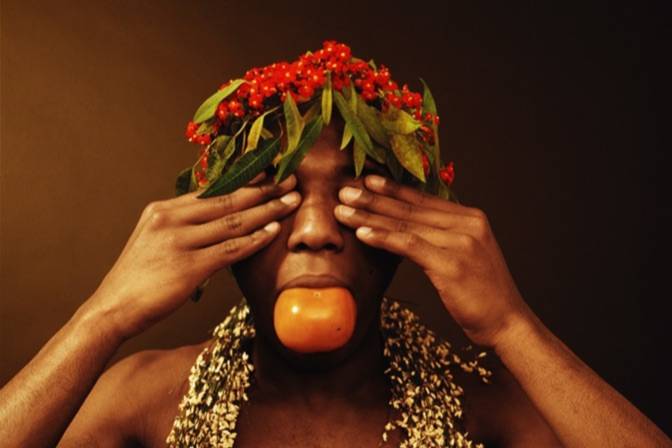
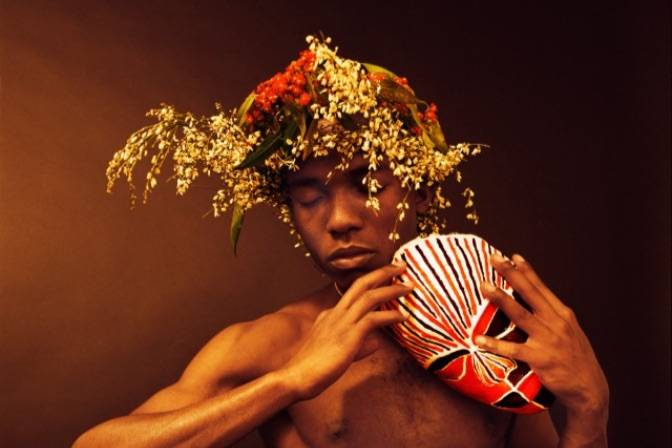
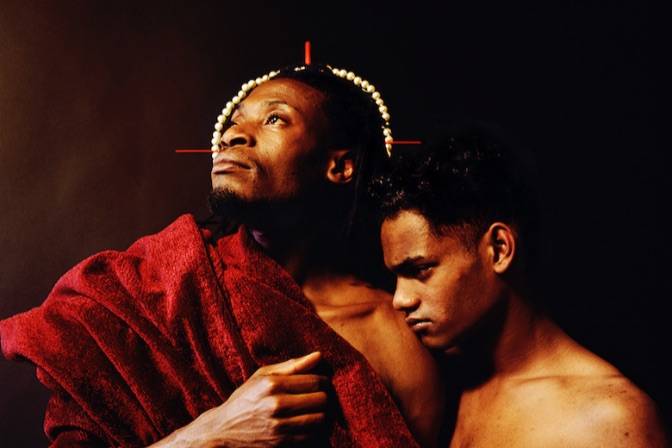
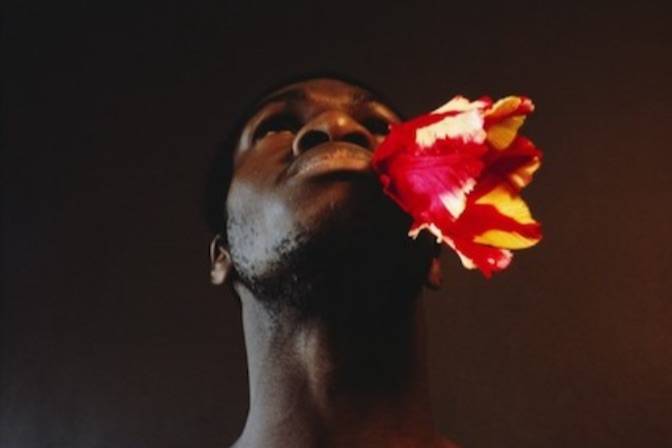
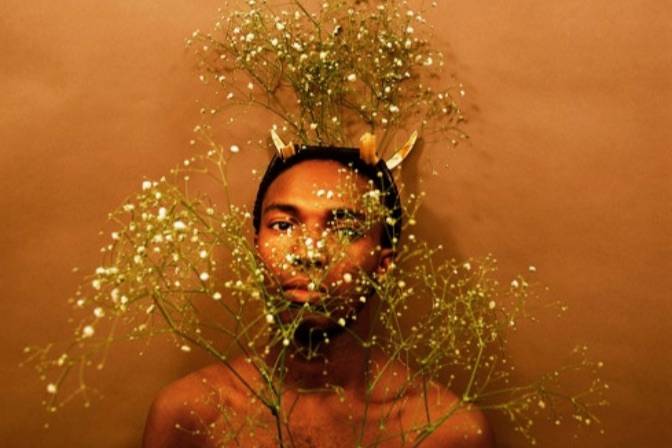
The Photography of Rotimi Fani-Kayode (1955–1989), is a solo exhibition of work by a Nigerian-born British artist and photographer. Renowned for his deeply evocative work exploring identity, sexuality, spirituality, and the cultural complexities of the African diaspora. Working primarily in staged black-and-white photography, he challenged Western representations of the Black body while examining themes of desire, ritual, and displacement. His images often combine elements of Yoruba spirituality, classical symbolism, and intimate portraiture, creating a visual language that confronts both racism and homophobia while reclaiming agency over Black queer identity.
Click here to read more.